
 Control Techniques
 Estun Automation
 CODESYS
 Crevis
 Nexcom / Nexcobot
 Leroy-Somer
 Servo Systems
 AC Drive + Motor
 DC Drives
 Smart PLC
 Panel PC / IPC
 Remote I/O
Thermoform Packaging, Tray Sealer and Multihead Weigher Automation
By the ONX Control engineering team · Last updated:
In short
A thermoform packaging machine heats the bottom film and forms it into cavities in a mould, fills the cavities with product, seals a second film on top (vacuum or modified atmosphere) and cuts the packs. The film is advanced one format length per cycle by a chain system gripping its edges; the forming, sealing and cutting stations work while the film is stopped. Cycle time is set by the chain indexing move and the lift and lower times of the stations; if product comes from a multihead weigher, the weigher discharge has to be in sync with this cycle. ONX Control builds thermoform, tray sealer and weigher integration with CODESYS SoftMotion, EtherCAT and servo drives.
How it works
A thermoform machine runs in this order: bottom film unwinder, chain transport, heating and forming station, filling zone, top film unwinder and print registration, sealing station, cross and longitudinal cutters and discharge conveyor. The chain is driven by a servo motor and advances one format length per cycle with an S-profile; format length depends on the number of cavity rows in the mould and comes from the recipe.
The lower tables of the forming and sealing stations are lifted by servo-driven toggle mechanisms or directly by servo axes; at the sealing station vacuum, gas flushing and sealing time run in sequence. Station motion is cammed to the same master axis as chain indexing; a station's move must start once the chain has stopped and finish before the chain moves again. The better this overlap, the shorter the cycle.
On printed top film, registration is needed so the print lands on the pack: a photocell reads the mark on the top film and the position of the top film unwinder or a registration roll is corrected every cycle. If the bottom film is printed, the same correction is applied to the chain indexing length. The cutters (cross knife, longitudinal circular knives, corner punches) also run tied to the same master axis.
On a tray sealer, preformed trays are brought to the sealing station by a carrier (servo conveyor or gripper arms); the top film is sealed and cut around the tray. A multihead weigher distributes product to weigh buckets with vibratory feeders, picks the combination of buckets closest to the target weight and discharges those buckets. The weigher discharge signal is tied to the packaging machine cycle; the vertical packaging or thermoform machine has to be in its receiving position when the product drops.
-
1
Indexing
The servo chain advances the bottom film one format length; with registration the length is corrected.
-
2
Forming
The heated bottom film takes the cavity shape in the mould by vacuum or pressure.
-
3
Filling
Cavities are filled by hand, by a dosing unit or from a multihead weigher in sync with the cycle.
-
4
Sealing and cutting
The top film is sealed under vacuum or gas; packs are cut across and lengthwise and discharged.
Critical parameters
| Parameter | Why it matters | Typical range / ONX field data |
|---|---|---|
| Cycle rate (cycles/min) | Set by chain indexing time and how well station moves overlap with it. | Defined per project |
| Format length and indexing accuracy | Set how well cavities line up with moulds and cutters; chain elongation and film stretch affect it. | Defined per project |
| Forming depth and heating | Together with film thickness and material set heating time and temperature. | Defined per project |
| Sealing time, vacuum and gas | Set pack seal integrity and shelf life; can be the longest step of the cycle. | Defined per project |
| Registration deviation | How accurately print lands on the pack on printed film; depends on the photocell and correction algorithm. | Defined per project |
| Weigher accuracy and combination rate | Deviation from target weight and discharges per minute; must match packaging speed. | Defined per project |
ONX architecture
In the ONX architecture the chain, station lift axes, top film registration and cutters are tied to one virtual master axis in CODESYS SoftMotion; each station's motion is defined against this axis with cam profiles, and profiles are recalculated from the recipe at format changes. Photocell inputs are wired to the fast capture inputs of the servo drives.
Heating plates and sealing tools are held by PID; vacuum and gas valves follow the station sequence. Ready, discharge and accept signals between the multihead weigher and the packaging machine are linked by fast I/O or communication. Recipes (format, temperatures, times, registration settings) are managed from the screen.

CODESYS SoftMotion and X Motion
Virtual master axis, chain indexing, station cam profiles, registration and recipes.

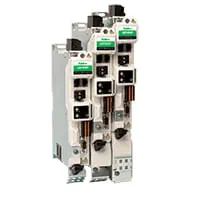
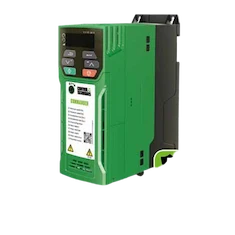
Servo drives
EtherCAT servo drives for chain, station lift and registration axes.

Servo motors and sizing
Motor and gearbox selection from chain inertia, format length and station mass.
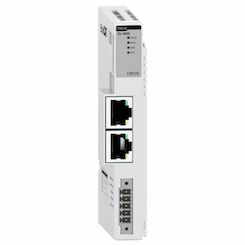
Remote I/O
EtherCAT remote I/O for heaters, vacuum and gas valves, weigher signals and safety.
Field reference
The video below is field footage of a thermoform packaging application from ONX Control's YouTube channel. We work out your machine's station layout, format range and cycle target together in a meeting.

Retrofit scenario
A typical picture on thermoform machines: stations on a mechanical camshaft, a chain driven by an old motion card, registration adjusted by hand, mechanical adjustment at format changes and drives with no spare parts. In a retrofit the chain, moulds and station mechanics are kept; chain and station motion move to servo axes and cam profiles in software.
- Surveying the chain, station mechanics, moulds and cutters
- Sizing chain and station axes for the target cycle
- Moving control to a CODESYS SoftMotion + EtherCAT architecture; registration and weigher integration
- Managing format and product recipes from the screen
- Commissioning in a planned shutdown and verifying cycle rate and pack quality
Frequently asked questions
Why does indexing length drift?
The chain elongates over time, the film stretches as it warms and forming pulls on the cavities. On plain film length comes from the servo axis position and chain elongation is compensated by a correction factor; on printed film it is corrected every cycle with a photocell.
What does driving stations by servo bring?
The lift profile can be changed in software, and a slow approach or a longer sealing time can be selected per product from the recipe. Without the dependency of a mechanical camshaft, station moves overlap better with the chain and the cycle gets shorter.
How is a multihead weigher linked to the packaging machine?
The weigher signals when it is ready, and the packaging machine sends the discharge command when it reaches the receiving position; product drop time is accounted for within the cycle. The weigher rate should equal or slightly exceed the packaging rate.
How is control different on a tray sealer?
Trays arrive preformed, so there is no forming; trays are positioned at the sealing station by a servo conveyor or gripper arms. Top film registration, sealing time, vacuum and gas control are the same as on a thermoformer.
What information is needed for a quote?
Machine type, format and number of cavities, target cycles/min, film types, use of printed film, filling method (hand, dosing, weigher) and the existing control system are enough for a first assessment.
Discuss the control of your thermoform or tray sealing machine with our engineers
Share your format, cycle target and filling method; we will come back with servo sizing and a control architecture proposal.