
 Control Techniques
 Estun Automation
 CODESYS
 Crevis
 Nexcom / Nexcobot
 Leroy-Somer
 Servo Systems
 AC Drive + Motor
 Smart PLC
 Panel PC / IPC
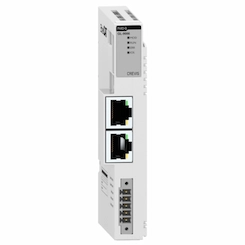 Remote I/O
Slitting Line, Cold Rolling and Pickling Line Automation
By the ONX Control engineering team · Last updated:
In short
A slitting line runs a wide steel coil through a slitter head with rotary knives, splits it into several narrow strips and winds each strip as a separate coil on the same recoiler mandrel. Strips leaving the knives are not exactly the same length because of edge wave and thickness variation; the loop pit and tension stand absorb this difference, and the recoiler has to wind all strips at the same tension. Cold rolling and pickling lines are built on the same basis: strip runs through the process at controlled tension and speed. ONX Control builds the drive and tension control of these lines with CODESYS, AC and DC drives.
How it works
A slitting line runs in this order: coil car and uncoiler, straightener and head shear, slitter head (circular knives on upper and lower arbors), scrap winders for edge trim, loop pit, separator discs and tension stand (felt pads or tension rolls), recoiler (expanding mandrel) and coil unloading car. The slitter head sets line speed; the uncoiler holds back tension on the strip and the recoiler applies its own tension after the tension stand.
The loop pit lets strips between the slitter and recoiler run at different lengths: edge strips elongate slightly differently from centre strips, and the difference is absorbed by the depth of the loops hanging in the pit. Loop level in the pit is read by ultrasonic or photocell sensors and the speed difference between slitter and recoiler is set from this level. On lines without a loop pit (drag mode) the slitter turns freely and the strip is pulled by the recoiler; this layout needs care with knife marks and edge quality on thin strip.
On the recoiler, motor speed drops as coil diameter grows; tension is held by motor torque from diameter calculation or by back tension from the tension stand. On the uncoiler, torque is reduced with diameter to give the same back tension as the coil shrinks; on heavy coils the uncoiler motor regenerates and energy is fed back to the mains or a common DC bus. Slowing down at coil head and tail is done from coil diameter and remaining length calculation.
On a cold rolling line the strip is reduced between work rolls; on reversing mills the strip passes back and forth between two coilers, one acting as uncoiler and the other as recoiler on each pass. The mill main drive is the speed reference, and entry and exit tensions are part of thickness control. On a pickling line the strip runs through acid tanks at constant speed; entry and exit accumulators keep the process section running during coil changes and welding, and bridles separate tension between sections.
-
1
Uncoiling
The coil is loaded on the uncoiler; the uncoiler opens the strip with back tension adjusted for diameter.
-
2
Slitting
Rotary knives split the strip into narrow strips; edge scrap is taken to separate winders.
-
3
Loop and tension
The loop pit absorbs length differences between strips; the tension stand builds winding tension.
-
4
Recoiling
The recoiler winds all strips on one mandrel at tension adjusted for diameter; coils are unloaded.
Critical parameters
| Parameter | Why it matters | Typical range / ONX field data |
|---|---|---|
| Line speed | Slitter speed; together with material thickness and strip count sets line capacity. | Defined per project |
| Material thickness and width | Set slitting force, motor ratings and the type of tension stand. | Defined per project |
| Winding tension | Sets coil tightness and telescoping; low on thin narrow strip, high on thick strip. | Defined per project |
| Coil weight and diameter range | Set uncoiler and recoiler motor torque and braking energy. | Defined per project |
| Loop level | Shows the speed balance between slitter and recoiler; sensor placement and control gain are critical. | Defined per project |
| Strip count and narrowest strip | Set knife layout, separators and tension stand arrangement. | Defined per project |
ONX architecture
In the ONX architecture the slitter is the line speed reference; the uncoiler and recoiler run in tension mode with diameter calculation and torque control, and loop level corrects the speed difference between recoiler and slitter. Control runs in CODESYS; diameter calculation, inertia compensation and tension ramps are sent to every drive in the same cycle. Scrap winders turn in ratio to line speed with limited torque.
On heavy coils high-power AC drives are used for uncoiler and recoiler, with a regenerative supply or common DC bus where needed; on DC motor lines DC drive replacement is an option. Coil data, strip layout and tension recipes are managed from the screen; coil head and tail slowdown is automatic from remaining length calculation.
CODESYS
Line speed reference, diameter calculation, tension and inertia compensation, loop control and recipes.

Industrial PC
Industrial PC running CODESYS Control RTE, coil tracking and the line screen.

Uncoiler, slitter and recoiler drives
High-power AC drives with encoder feedback running in torque and speed mode.
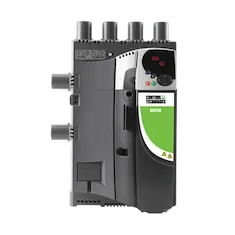
DC motor lines
DC drive replacement for DC motor uncoilers and recoilers.

Field reference
The architecture on this page is built on the diameter calculation, torque control and drive platform ONX Control uses in winder tension control, accumulator and cut-to-length applications. We work out your line layout and tension needs together in a meeting.
Retrofit scenario
A typical picture on slitting lines: DC motor uncoiler and recoiler, a recoiler whose tension the operator sets with a potentiometer, coils that loosen or telescope as they grow and a loop level watched by hand. In a retrofit the knife arbors, loop pit and mandrels are kept; drives are renewed or moved to AC and tension is held automatically from diameter calculation.
- Surveying the uncoiler, slitter head, tension stand and recoiler
- Renewing drives or moving from DC to AC; choosing a drive structure for braking energy
- Moving diameter calculation, tension and loop control to CODESYS
- Managing coil and strip recipes from the screen
- Commissioning in a planned shutdown and comparing coil tightness and line speed
Frequently asked questions
Is a loop pit needed?
On thin and narrow strip, or material with edge wave, it is usually needed to absorb length differences between strips. There are also lines running in drag mode on thick plate and few strips; here the slitter is pulled by the recoiler and tension distribution depends on the tension stand.
How is recoiler tension calculated?
Tension is motor torque divided by coil radius. The controller calculates diameter from line speed and recoiler speed, raises torque with diameter for the required tension and adds torque for coil and mandrel inertia during acceleration and deceleration.
Why does the uncoiler regenerate?
The uncoiler holds back tension on the strip; the motor brakes while turning and generates energy. This energy can be burned in a brake resistor, passed to the recoiler on a common DC bus or fed back to the mains.
What does ONX do on cold rolling and pickling lines?
Drive and tension control for main drives, uncoilers and recoilers, bridles and accumulators. Process-specific systems such as automatic gauge control (AGC) are included in the architecture so that they communicate with the existing systems.
What information is needed for a quote?
Material thickness and width range, coil weight and diameters, line speed, strip count, existing motors and drives and the loop pit and tension stand details are enough for a first assessment.
Discuss the tension control of your slitting or strip line with our engineers
Share your material, coil and line speed data; we will come back with drive sizing and a tension control architecture proposal.