Flying Shear Automation
In short
A flying shear cuts continuously moving material (tube, profile, strip, wire) to length without stopping the line. The cutter carriage is synchronized to the line speed measured by an encoder using an electronic cam, cuts while travelling at the same speed as the material, then returns to its start position for the next cut. ONX Control builds this control on a PC-based platform with CODESYS SoftMotion, EtherCAT and servo drives.
How it works
A measuring wheel (encoder) on the line continuously measures the position and speed of the material; this signal is the master axis for the controller. The servo axis that drives the cutter carriage is the slave, coupled to the master by an electronic cam (CAM) or electronic gear function.
The cut length is the distance between two cuts on the master axis. In every cycle the controller calculates when the carriage must enter the synchronous zone; because the cut is triggered by measured position rather than time, it lands at the right point on the material even when line speed changes.
-
1
Wait and catch
The carriage waits at its start position and accelerates to line speed as the cut point approaches.
-
2
Synchronous zone and cut
Carriage speed matches line speed (zero relative speed) while the saw, shear or press makes the cut.
-
3
Disengage
Once the cutter leaves the material, synchronization is released and the carriage decelerates.
-
4
Return
The carriage returns to its start position in time for the next cut. For short lengths, this return time sets the shortest achievable cut length.
Critical parameters
| Parameter | Why it matters | Typical range / ONX field data |
|---|---|---|
| Line speed | Sets the synchronous speed the carriage must reach and therefore the servo motor power. | Defined per project |
| Cut length tolerance | The sum of encoder resolution, measuring wheel slip and synchronization error; correct placement of the measuring wheel is critical. | Defined per project |
| Cycle rate (cuts per minute) | The sum of acceleration, synchronous and return times; determines mechanical stress and motor heating. | Defined per project |
| Minimum cut length | Limited by carriage stroke and return acceleration. | Defined per project |
| Carriage mass and stroke | Determine servo motor torque, gear ratio and the choice of drive mechanics (rack and pinion, ball screw, belt). | Defined per project |
ONX architecture
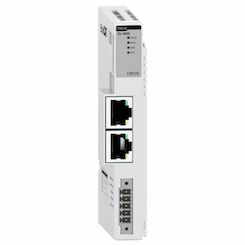
In the ONX architecture, motion control runs in CODESYS Control RTE and CODESYS SoftMotion on an industrial PC; no separate motion controller card is needed. The line encoder, servo drives and remote I/O share one EtherCAT network and run on a common time base through EtherCAT Distributed Clocks.
The electronic cam, synchronous zone and return profiles are written with PLCopen motion blocks; cut lists and recipes are managed from the operator panel.

CODESYS SoftMotion
Master/slave synchronization with PLCopen motion blocks and an electronic cam (MC_CamIn).

Industrial PC
Industrial PC or panel PC running CODESYS Control RTE.
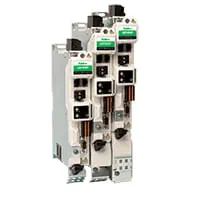
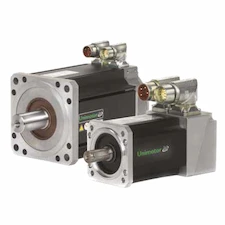
Servo motors and sizing
Motor and gearbox selection based on carriage mass and motion profile.
Field reference
The videos below are field footage of double-head flying saw applications from ONX Control's YouTube channel: the saw carriage cuts while synchronized to the speed of the tube/profile line.


Retrofit scenario
A typical picture on existing flying shear lines: an old motion card or PLC without spare parts, drives controlled by an analog reference, and closed software whose cam profile cannot be changed. In a retrofit the mechanics are usually kept; the controller, drives and, if needed, motors are replaced.
- Measuring the existing mechanics: carriage mass, stroke, drive mechanics and measuring wheel
- Re-sizing motor and drive for the new motion profile
- Moving the control to a CODESYS SoftMotion + EtherCAT architecture
- Transferring cut lists and recipes to the new operator panel
- Commissioning during a planned stop, with comparative cut tests against the old system
Frequently asked questions
What is the difference between a flying shear and a flying saw?
The control principle is the same: the cutter moves synchronized to line speed. The difference is the cutting element; a shear or press blade completes the cut quickly, while a saw needs a longer synchronous zone depending on the material cross-section.
Does the cut length change if line speed changes?
No, because the cut is triggered by the position measured by the line encoder rather than by time, and the electronic cam follows speed changes. Accuracy is mainly determined by measuring wheel slip and encoder resolution.
Do we need a separate motion controller card?
No. CODESYS SoftMotion runs the electronic cam and synchronization functions in the software PLC on the industrial PC; the servo drives connect over EtherCAT.
Can the mechanics of our existing line be kept?
In most retrofit projects they are. Carriage mass, stroke and drive mechanics are measured to check whether the existing motor is sufficient for the new motion profile; if not, only motor and drive are replaced.
What information is needed for a quote?
Material type and cross-section, line speed range, cut length range, required tolerance, carriage mass and stroke, cutter type (shear, saw, press) and the existing control system are enough for a first assessment.
Discuss your flying shear project with our engineers
Share your line speed, cut length and tolerance targets; we will come back with preliminary sizing and an architecture proposal.