Winder / Unwinder Tension Control
In short
Winder and unwinder tension control keeps the pulling force in the material constant while the roll diameter continuously changes. The controller calculates the roll diameter, sets motor torque in proportion to it and, where needed, corrects it with feedback from a dancer or load cell. ONX Control builds this control with CODESYS, EtherCAT and drives running in torque control mode.
How it works
The motor torque needed for constant tension is the tension force multiplied by the roll radius, taking gear ratio and efficiency into account (T = F × r / (i × η)). As the roll grows the required torque rises and the motor speed falls to keep the same line speed; on an unwinder the opposite happens.
Roll diameter can be calculated from line speed and motor speed, measured with an ultrasonic or laser sensor, or derived from material thickness and revolution count. Inertia compensation covers the changing roll inertia during acceleration and deceleration, and friction compensation covers mechanical losses. Because the unwinder is braking, this energy is either burned in a braking resistor or returned to the grid.
-
1
Open-loop torque control
Tension is set by a torque reference derived from the calculated diameter and compensations; no extra sensor is needed and it is sufficient for stable materials.
-
2
Closed loop with a dancer
The dancer position produces a speed correction; the arm also damps sudden tension changes mechanically.
-
3
Closed loop with a load cell
Tension is measured directly and the torque or speed reference is corrected; preferred for sensitive films and foils.
-
4
Taper tension
As the roll grows, tension is reduced along a defined curve to prevent crushing of inner layers and telescoping of the roll.
Critical parameters
| Parameter | Why it matters | Typical range / ONX field data |
|---|---|---|
| Line speed | Sets the motor speed range between empty and full roll. | Defined per project |
| Tension range and tolerance | Determine the resolution of the torque reference and the need for closed-loop control; at low tension friction dominates. | Defined per project |
| Cycle / roll change time | Tension must be held during acceleration and deceleration ramps and during roll changes. | Defined per project |
| Build-up ratio (max. / min. diameter) | The motor must cover both high torque at low speed and low torque at high speed; this drives motor and gearbox selection. | Defined per project |
| Material | Film, paper, wire, fabric or metal strip; elasticity and breaking strength determine the control method. | Defined per project |
ONX architecture
Diameter calculation, tension and taper curves, inertia and friction compensation and the dancer/load cell PID loops run in CODESYS. Drives are controlled over EtherCAT in torque-limited speed mode or direct torque mode; dancer and load cell signals are read through remote analog I/O.
Because the unwinder and winder share the same line speed reference, tension is held across all axes while the line accelerates and decelerates.

CODESYS
Diameter calculation, tension control and compensations; recipe-based tension and taper curve.

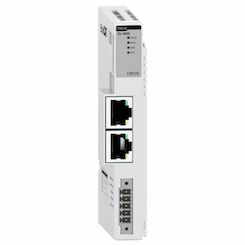
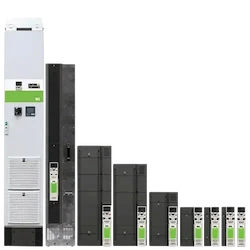
AC and servo drives
Drives that can run in torque control mode; AC for large winders, servo for fast and precise axes.

Motors
AC induction or servo motors with a torque-speed range suited to the build-up ratio.
Energy recovery
Returning the braking energy of the unwinder to the grid (Active Front End).
Field reference
The video below is field footage of a winder application from ONX Control's YouTube channel: a winder on a plastic/film line running with diameter calculation and torque (tension) control.

Principle illustrations


Retrofit scenario
A typical picture on older winders: a DC motor with a DC drive, tension set by a potentiometer and a separate analog tension controller. In a retrofit the DC motor can be replaced by an AC or servo motor, or the mechanics and DC motor can be kept and only the DC drive renewed.
- Inspecting the existing motor, gearbox, dancer and sensors
- Renewing the DC drive (Mentor MP) or converting from DC to an AC/servo motor
- Moving tension control to CODESYS and linking it to recipes
- Adding a load cell or diameter sensor where needed
- Commissioning with tension logging during acceleration, deceleration and roll change
Frequently asked questions
Can tension be controlled without a load cell?
Yes. In open-loop torque control, tension is set from the calculated diameter and compensations. Accuracy depends on how well friction and inertia compensation are tuned. For sensitive materials a closed loop with a dancer or load cell is recommended.
Dancer or load cell?
A dancer sets tension with a weight or pneumatic cylinder and damps sudden changes mechanically. A load cell measures tension directly and makes it easy to change the tension setpoint in software. The choice depends on material, speed and existing mechanics.
How is roll diameter calculated?
The most common method divides line speed by the winder motor speed. Alternatively it can be measured with an ultrasonic/laser sensor or calculated from material thickness and revolution count. The starting diameter is set separately at each roll change.
What is taper tension and when is it needed?
Taper tension reduces tension by a defined ratio as the roll grows. It is used on elastic films and large-diameter rolls to prevent crushing of the inner layers and sideways slipping of the roll.
Can our DC motor winder be upgraded?
Yes. If the mechanics and DC motor are sound, only the DC drive can be renewed; if the motor is also replaced, the winder moves to an AC or servo motor. The DC to AC retrofit calculator can be used to compare cost and efficiency of the two options.
Discuss your winder / unwinder project with our engineers
Share your material, line speed, tension range and roll diameters; we will come back with a control method and drive proposal.