
 Control Techniques
 Estun Automation
 CODESYS
 Crevis
 Nexcom / Nexcobot
 Leroy-Somer
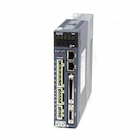 Servo Systems
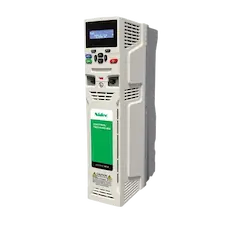 AC Drive + Motor
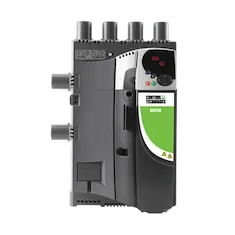 DC Drives
 Smart PLC
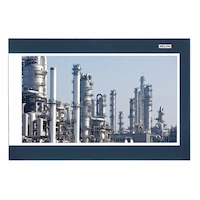 Panel PC / IPC
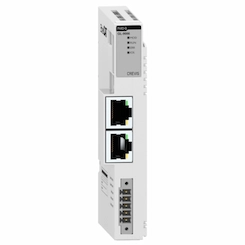 Remote I/O
Vertical Packaging Machine (VFFS) Automation
In short
A vertical packaging machine (VFFS, vertical form fill seal) turns flat film into a tube over a forming collar and tube, closes it with a longitudinal seal, makes the bottom seal, fills the product and cuts the bag with the top seal. Bag length, seal quality and speed depend on film pull, jaw motion and dosing running in sync on one time base. ONX Control builds this control with CODESYS SoftMotion, EtherCAT and servo drives; registration correction, the box motion jaw profile and dosing sync run in the same controller.
How it works
The film is pulled down over the forming tube by servo-driven pull belts. On intermittent machines the film stops for every bag, the jaws close and seal. On continuous machines the film never stops: the jaws close in a box motion, travel down with the film at the same speed during the seal, then open and return up. In box motion, the vertical and horizontal jaw axes are coupled by electronic cams to a master axis derived from the film axis.
On printed film the bag must be cut relative to the registration mark on the film. The instant the photocell sees the mark, the film axis position is latched (touch probe); the difference between measured and expected position is added to the pull distance in the next cycle. Film stretch and print tolerance therefore do not accumulate, and the print stays in the same place on every bag.
The dosing unit (weigher, auger or volumetric filler) is triggered in sync with the jaw cycle: the product is timed to drop into the bag after the bottom seal and before the top seal. Taking the product drop time into account, the dosing signal is advanced relative to the jaw position.
-
1
Film pull
Servo pull belts draw the film by one bag length per bag (intermittent) or at constant speed (continuous); the longitudinal seal closes the tube.
-
2
Registration correction
The photocell reads the print mark; the film position error is corrected in the next pull.
-
3
Bottom seal and dosing
The jaws close and seal the bottom of the bag; the dosing unit is triggered in sync and the product drops into the bag.
-
4
Top seal and cut
In the next cycle the jaws seal and cut the top of the filled bag. With box motion jaws this happens without stopping the film, at film speed.
Critical parameters
| Parameter | Why it matters | Typical range / ONX field data |
|---|---|---|
| Bag length and speed (bags per minute) | Sets film axis acceleration and speed, cycle time and servo motor power. | Defined per project |
| Seal time and temperature | The contact time the film needs; sets the synchronous zone length with box motion jaws and the dwell time on intermittent machines. | Defined per project |
| Registration tolerance | Depends on photocell response time, position latch resolution and film stretch; correction limits are set in the recipe. | Defined per project |
| Dosing type and drop time | Weigher, auger or volumetric filler; the product drop time sets how far the dosing trigger is advanced. | Defined per project |
| Film type and reel diameter | Affects pull force, unwind / brake control and belt pressure. | Defined per project |
ONX architecture
In the ONX architecture, film pull, the jaw axes and, where used, the dosing auger are servo axes coupled to one master axis in CODESYS SoftMotion running on CODESYS Control RTE on an industrial PC. Because jaw motion and dosing timing are defined by electronic cams against this master, all motion scales together when machine speed changes.
The photocell, jaw heaters and temperature inputs, dosing signals and safety circuits connect to the same network through EtherCAT remote I/O; the registration mark position is taken with the drive's fast latch input. Bag length, seal time, jaw temperatures and dosing parameters are managed as recipes from the operator panel.

CODESYS SoftMotion
Master axis, electronic cams for box motion jaws, registration position latch and dosing timing.

Industrial PC
Industrial PC or panel PC running CODESYS Control RTE and the recipe screen.
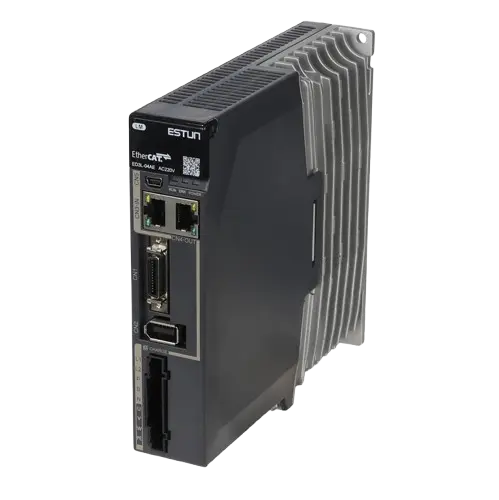

Servo motors and sizing
Motor and gearbox selection from bags per minute, jaw mass and film pull force.
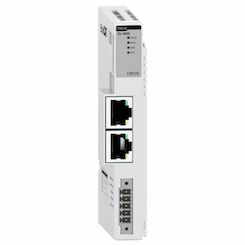
Remote I/O
EtherCAT remote I/O for the photocell, jaw heater outputs and temperature inputs, dosing signals and safety.
Field reference
ONX Control has automated a vertical packaging machine for a packaging machine builder.
Servo film pull, registration mark correction, box motion jaws and dosing sync described on this page are functions ONX Control applies in its packaging projects. The animation above shows how box motion jaws work in sync with the film and dosing.
Retrofit scenario
A typical picture on older vertical machines: pneumatic jaws, film pull by clutch-brake or stepper motor, and the registration mark followed by a separate control card. The forming tube, jaw mechanics and dosing unit are usually kept; film pull and, where needed, the jaws are converted to servo drives and all timing is brought into one controller.
- Collecting current bags per minute, bag length range and film types
- Servo sizing for the film pull and jaw axes
- Moving photocell, heater and dosing signals to EtherCAT I/O
- Mechanical assessment of moving from intermittent to continuous box motion operation
- Commissioning with trial production on different films and bag lengths
Frequently asked questions
What is the difference between intermittent and continuous vertical packaging?
On an intermittent machine the film stops for every bag and the jaws seal in a fixed position; control is simpler, but speed is limited by the film accelerating and stopping every cycle. On a continuous machine the film never stops; the jaws travel down with the film in a box motion and seal at film speed. This gives more bags per minute for the same seal time, but requires the jaws to be coupled to servo axes by electronic cams.
How does registration mark correction work?
The instant the photocell sees the print mark, the film axis position is taken with the drive's fast latch input. It is compared with the expected position and the difference is added to the pull distance in the next cycle. The correction per cycle is limited; if the mark is missed several times in a row the machine warns or stops.
How is the dosing unit synchronized with the jaws?
Dosing is triggered by master axis position, not by time. Because the time for the product to fall from the dosing outlet to the bottom of the bag is known, the trigger is advanced by that time; when machine speed changes, the trigger angle is recalculated accordingly.
Can my existing machine be converted to servo?
In most cases, yes. The forming tube, jaw and dosing mechanics are kept and film pull is converted to a servo drive; if the jaws are also moved to servo, an intermittent machine can be converted to continuous box motion operation. The suitability of the jaw mechanics for vertical travel is assessed separately.
What information is needed for a quote?
Target bags per minute, bag length and width range, film types, dosing unit type, jaw design (intermittent / box motion), existing motors and the control system are enough for a first assessment.
Discuss your vertical packaging machine with our engineers
Share your bags-per-minute target, bag lengths and dosing unit; we will come back with an axis layout, servo sizing and an architecture proposal.