
 Control Techniques
 Estun Automation
 CODESYS
 Crevis
 Nexcom / Nexcobot
 Leroy-Somer
 Servo Systems
 AC Drive + Motor
 DC Drives
 Smart PLC
 Panel PC / IPC
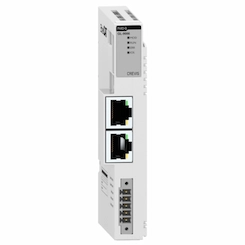 Remote I/O
Smart Belt (Intelligent Infeed) Automation
By the ONX Control engineering team · Last updated:
In short
A smart belt (intelligent infeed) is an infeed made of short belts in series, each driven by its own servo motor. It accumulates products that arrive at random spacing from an oven, cooling tunnel or moulding process, separates them, measures the position of every product with a photocell and delivers it to the packaging machine at exactly the right moment, in the right phase. Products reach the rotary jaws or the next process directly, without a lug chain. ONX Control builds smart belts with CODESYS SoftMotion, EtherCAT and servo drives, coupled to the master axis of the packaging machine.
How it works
Products arriving from the upstream process are not evenly spaced: some touch each other, others have gaps between them. The first belt is the accumulation belt; it gathers products into a short queue. The next belt runs faster, and the speed ratio between the two belts opens a gap between products (gapping). While a product sits on two belts, both belts are held at the same speed, so the product does not slip or turn.
Photocells at the belt transfers see the leading edge of every product; at that instant the belt axis position is taken with the drive's fast latch input. The controller follows each product with a tracking record: which belt it is on, where on the belt, and which pack pitch (slot) of the packaging machine it will go to. Product length comes from the same measurement, so a product out of length tolerance can be flagged and rejected.
The last belt (phasing belt) compares the arrival position of each product with the position of the machine's master axis and closes the difference with an acceleration or deceleration profile while the product is on the belt; at the transfer point the belt is back at machine speed. It is registration mark correction applied to products. For a product beyond the correction limit the slot is skipped and the machine is told: the rotary jaws do not make an empty pack. Machine speed can also follow the number of products in the queue, speeding up when the infeed is full and slowing down when it runs low.
-
1
Accumulation
Randomly spaced products gather in a short queue on the accumulation belt; the queue level sets machine speed.
-
2
Gapping
A faster belt separates the products; the speed ratio sets the gap between them.
-
3
Measuring and tracking
A photocell latches the edge of every product; its position, length and target slot are tracked in the controller.
-
4
Phase correction and transfer
The phasing belt closes the position error of each product and delivers it at machine speed, at the right moment.
Critical parameters
| Parameter | Why it matters | Typical range / ONX field data |
|---|---|---|
| Target speed (products per minute) | Sets the time left for measuring and correcting each product, the belt speeds and the servo motor power. | Defined per project |
| Product length, weight and belt friction | Set the highest acceleration the product allows without slipping on the belt; the correction profile is calculated within this limit. | Defined per project |
| Infeed rate and gap distribution | Set the length of the accumulation queue and the speed ratio of the gapping belt; show whether the machine has to slow down when the infeed has gaps. | Defined per project |
| Number and length of belts | The phasing belt length sets the largest position error that can be corrected on one product; only one product may be on a belt at a time. | Defined per project |
| Sensor and latch | Photocell response time multiplied by belt speed gives the position uncertainty; sensor choice matters for transparent, glossy or irregular products. | Defined per project |
| Belt transfers | Transfer gap, nose bar diameter and belt height decide whether small and soft products pass the transfer without catching. | Defined per project |
ONX architecture
In the ONX architecture every belt is a separate servo axis, coupled to the master axis of the packaging machine in CODESYS SoftMotion running on CODESYS Control RTE on an industrial PC. The accumulation and gapping belts follow the master with a speed ratio; the phasing belt follows it with an electronic gear plus a superimposed phase correction move. When machine speed changes, all belts speed up or slow down in the same ratio.
Product tracking, slot assignment and empty-slot information run in the same controller and go straight to the rotary jaws or the next station. Photocells connect to the drives' fast latch inputs or to time-stamped EtherCAT inputs. Product length, target gap, acceleration limit and speed are managed as recipes from the operator panel.

CODESYS SoftMotion
Master axis, belt speed ratios, phase correction move and product tracking.

Industrial PC
Industrial PC or panel PC running CODESYS Control RTE, the recipe and the product tracking screen.
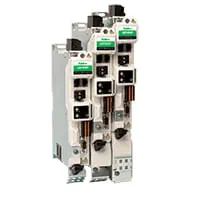

Servo motors and sizing
Low-inertia motor and gearbox selection for the short accelerations and decelerations of the phasing belt.
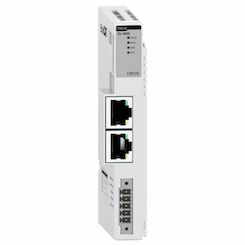
Remote I/O
EtherCAT remote I/O for photocells, the reject device, queue level sensors and safety.
Field reference
The video below shows ONX Control's 17-axis cake packaging line. Its infeed uses a smart belt and a lug chain: the cakes are gapped and phased on servo belts and handed to the packaging machine. All 17 servo motors are coupled to the same master axis and run in sync; the line was designed with Control Techniques drives and a CODESYS architecture.

Retrofit scenario
A typical picture on older lines: single-motor, fixed-speed infeed belts, pneumatic stops that hold and release products, or operators placing products into lugs by hand. When the infeed becomes irregular the machine makes empty packs, products hit the jaws or the line is slowed down. In a retrofit the belt frames are often kept; the belts are split into short servo sections, photocells are added and the infeed is coupled to the master axis of the packaging machine.
- Collecting product types, lengths, weights and target products per minute
- Measuring the gap distribution of the incoming product flow
- Servo sizing from the number and length of belts and the acceleration limit
- Coupling to the packaging machine's master axis and empty-pack logic
- Commissioning with real product at different infeed densities
Frequently asked questions
What is the difference between a smart belt and a lug chain?
A lug chain carries products between pushers at a fixed pitch; each product has to arrive in front of a lug at the right time. A smart belt brings products to the right gap and phase without lugs, only by changing belt speeds. Lines that feed a lug chain also use a phasing belt as their last section.
How many belts are needed?
A typical smart belt has at least three sections: accumulation, gapping and phasing. More sections are added when the infeed is very irregular, when products come from more than one lane or when the target speed is high. The number and length of belts are calculated from product length, speed and the allowed acceleration.
What happens if a product slips on the belt?
Slip means the measured product position drifts from the real one. The phasing belt's acceleration is therefore kept within the limit that the friction between product and belt allows; if needed, a second photocell between belts measures the product again.
What happens when the infeed runs empty or a product cannot be corrected?
That slot is skipped and the packaging machine is told; the rotary jaws do not make an empty pack and film pull can be stopped if needed. If the queue stays low, machine speed is reduced automatically.
What information is needed for a quote?
Product dimensions and weight, product surface, target products per minute, which process and how many lanes the products come from, the packaging machine type and the existing infeed are enough for a first assessment.
Discuss your smart belt infeed with our engineers
Share your products, speed target and how the incoming flow behaves; we will come back with the number of belts, servo sizing and an architecture proposal.