
 Control Techniques
 Estun Automation
 CODESYS
 Crevis
 Nexcom / Nexcobot
 Leroy-Somer
 Servo Systems
 AC Drive + Motor
 DC Drives
 Smart PLC
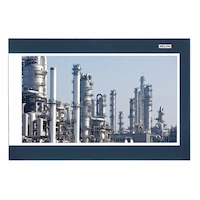 Panel PC / IPC
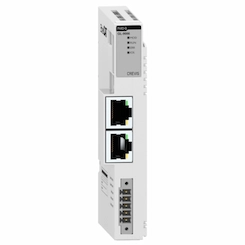 Remote I/O
Extrusion Line Automation: Extruder, Haul-off, Planetary Saw and Line Sync
By the ONX Control engineering team · Last updated:
In short
An extrusion line melts plastic granulate in the extruder screw and forces it through a die into a pipe, profile or sheet; the product passes through vacuum sizing and cooling tanks, is pulled at constant speed by a caterpillar haul-off and is cut to length by a saw at the end of the line. Wall thickness and weight per metre are set by the ratio between extruder output and haul-off speed, so the extruder, dosing, haul-off and saw have to run on one line speed reference. ONX Control builds the drive and control system of extrusion lines with CODESYS, EtherCAT, AC and servo drives.
How it works
A typical pipe line runs in this order: material drying and dosing, extruder (single or twin screw), die, vacuum sizing tank, spray cooling tanks, ultrasonic wall thickness gauge, marking, caterpillar haul-off, planetary saw or guillotine cutter and a tipping table or coiler. On profile lines the calibration table and haul-off are similar and the cutter is usually a saw; on compounding lines the melt leaves the die as strands, is cooled and cut in a pelletizer.
The extruder motor is an AC or permanent magnet motor running with high torque over a wide speed range; screw speed sets melt output, and melt pressure and motor torque show the state of the process. A gravimetric (loss-in-weight) feeder doses material by weighing it in kg/h. Weight per metre (g/m) is output (kg/h) divided by haul-off speed (m/min): with constant output, a faster haul-off makes the wall thinner. Haul-off speed is therefore either set in ratio to the extruder or corrected in closed loop from weight per metre and wall thickness measurement.
A caterpillar haul-off has two to twelve tracks; the tracks grip the pipe without spoiling the sized diameter and set the line speed. On multi-track haul-offs each track has its own motor and load sharing is needed: speeds are held to the same reference and torque balance is monitored. Track contact pressure is set from the recipe for pipe diameter and wall thickness.
A planetary saw cuts the pipe with a blade that orbits around it without turning the pipe; the saw carriage moves in sync with the haul-off during the cut and returns afterwards. This is the extrusion version of the flying saw principle: the cut is triggered from the position read from the haul-off encoder or a measuring wheel, and the carriage is coupled to the line with an electronic cam. Because cut time changes with diameter and wall thickness, on thick pipe the sync zone gets longer and carriage stroke sets the line speed limit.
-
1
Dosing and melting
The gravimetric feeder doses material in kg/h; the extruder screw melts it and forces it into the die.
-
2
Sizing and cooling
The product settles to size in the vacuum tank, solidifies in the cooling tanks and its wall thickness is measured.
-
3
Haul-off
The caterpillar pulls the product at constant speed; speed is matched to extruder output for the weight per metre target.
-
4
Cutting
The planetary saw carriage syncs to the haul-off, cuts the pipe to length and returns; pieces are stacked.
Critical parameters
| Parameter | Why it matters | Typical range / ONX field data |
|---|---|---|
| Output (kg/h) | Set by extruder screw speed and dosing capacity; the production capacity of the line. | Defined per project |
| Weight per metre (g/m) and wall thickness | Output divided by haul-off speed; directly sets product standard and material cost. | Defined per project |
| Line speed | Haul-off speed; together with cooling length and cut time sets the line limit. | Defined per project |
| Extruder torque and melt pressure | Show screw load and process stability; monitored for overload and pressure protection. | Defined per project |
| Cut length and tolerance | Set by the haul-off encoder or measuring wheel, cut triggering and the saw carriage's sync error. | Defined per project |
| Track pressure and load sharing | Set so the pipe is gripped without crushing and torque stays balanced between tracks. | Defined per project |
ONX architecture
In the ONX architecture the line is controlled by CODESYS running on an industrial PC. Extruder, dosing, haul-off and saw share one line speed reference; haul-off speed can run in ratio to extruder output or be corrected in closed loop from weight per metre and wall thickness measurement. Heating zones (barrel, die) are held by PID.
The saw carriage is coupled to the haul-off encoder with an electronic cam in CODESYS SoftMotion, and cut length can be changed while running. High-torque AC drives are chosen for the extruder motor, load sharing for multi-track haul-offs and a suitable drive structure for fast stops that need regenerative braking. Recipes (product section, output, weight per metre, temperatures, cut length) are managed from the screen.

CODESYS SoftMotion
Line speed reference, weight per metre control, saw carriage electronic cam and recipes.

Industrial PC
Industrial PC running CODESYS Control RTE, trend logging and the line screen.

Extruder and haul-off drives
AC drives for the high-torque extruder motor and haul-off tracks.

Motors
High-efficiency induction or permanent magnet motors for the extruder.
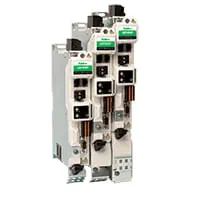
Servo drives
EtherCAT servo drives for the planetary saw carriage and cutting feed.
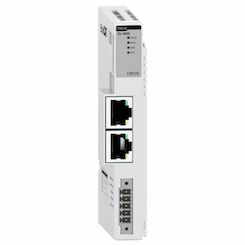
Remote I/O
EtherCAT remote I/O for heating zones, vacuum pumps, pressure sensors and safety signals.
Field reference
The architecture on this page is built on the CODESYS, EtherCAT and drive platform ONX Control uses in its flying saw, load sharing and PID process control applications; extruder drive packages are part of ONX's high-power AC drive supply. We work out your line's layout together in a meeting.
Retrofit scenario
A typical picture on extrusion lines: a DC motor extruder, a haul-off linked by an analog reference with a ratio set by hand, speed control with no link to the measuring system, a cutter control card with no spare parts and a screen that keeps no records. In a retrofit the screw, die, tanks and haul-off mechanics are kept; the extruder is moved from DC to AC or gets a new DC drive, and the line is synchronized under one controller.
- Surveying the extruder motor, haul-off tracks and cutter
- Moving the extruder drive from DC to AC or replacing the DC drive
- Moving the line speed reference and weight per metre control to CODESYS
- Synchronizing the cutter to the haul-off with an electronic cam
- Commissioning in a planned shutdown and verification with weight per metre and cut length measurements
Frequently asked questions
How is weight per metre held constant?
Weight per metre is output divided by haul-off speed. The simplest method runs the haul-off in ratio to extruder speed; a more accurate method uses the real output measured by the gravimetric feeder and wall thickness measurement, and corrects haul-off speed or screw speed in closed loop.
What is the difference between a planetary saw and a guillotine cutter?
A planetary saw cuts with chips by orbiting around the pipe without turning it; on large-diameter, thick-walled pipe it gives a clean cut face but cut time is long. Guillotine or chipless cutters are faster on small diameters. In both cases the cutter carriage has to move in sync with the haul-off.
Which drive suits an extruder?
An extruder needs high torque at low speed and runs under continuous load; the drive is sized for continuous torque and motor cooling is chosen for low speed. Closed-loop vector control and, where needed, encoder feedback improve speed stability.
Why does a multi-track haul-off need load sharing?
The tracks grip the same pipe, so their speeds are mechanically linked; if one runs slightly faster it takes the load and marks or slips on the pipe surface. A common speed reference and torque balance control share the load equally between tracks.
What information is needed for a quote?
Product type and size range, extruder motor power, target output and line speed, number of haul-off tracks, cutter type and the existing control and drive system are enough for a first assessment.
Discuss the drive and sync control of your extrusion line with our engineers
Share your product, output and line speed targets; we will come back with drive sizing and a line architecture proposal.