
 Control Techniques
 Estun Automation
 CODESYS
 Crevis
 Nexcom / Nexcobot
 Leroy-Somer
 Servo Systems
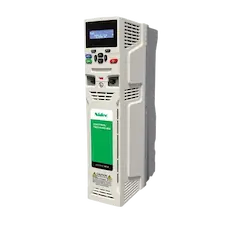 AC Drive + Motor
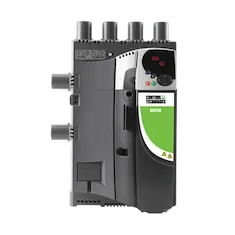 DC Drives
 Smart PLC
 Panel PC / IPC
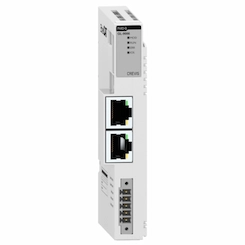 Remote I/O
ERW Tube and Profile Mill Flying Saw Automation
By the ONX Control engineering team · Last updated:
In short
ERW tube and profile mills uncoil strip, form it through roll stands into a tube or hollow section and weld it with high frequency; the product leaves the end of the line continuously. A flying saw cuts this running product to length without stopping the line: the saw carriage synchronizes to the line speed read from a measuring wheel, clamps the product, the saw passes through the section, the clamp opens and the carriage returns to its start position. ONX Control builds the flying saw and the line drive system with CODESYS SoftMotion, EtherCAT, servo and AC drives.
How it works
A typical ERW tube mill runs in this order: uncoiler, strip end welder and strip accumulator, forming stands, high-frequency welder and outside bead scarfing, cooling, sizing stands, straightening and flying saw. Line speed is set by the main drives of the forming and sizing sections; the accumulator keeps the mill running during coil changes and strip welding. Square and rectangular hollow sections are formed from round tube in the sizing section of the same mill. Roll forming lines producing open profiles have a different punching and cut-off layout; they are covered on a separate solution page.
The saw carriage is coupled with an electronic cam to the encoder of a measuring wheel running on the product. The main drive motor speed is not used as master: the product elongates in the sizing stands and slips against the rolls; the wheel running on the product itself is what measures length correctly. Because the cut is triggered by measured position, it is made at the right length even when line speed changes during weld adjustment.
Unlike a shear or press blade, a saw needs time to pass through the section: cut time is the saw's feed travel divided by its feed rate, and the feed rate is chosen for diameter, wall thickness, material and saw type. The carriage has to stay in sync with the line for this time plus the clamp closing and opening times. The longer the sync zone, the longer the carriage stroke; with the same stroke, higher line speed or shorter cut length leaves less time for the return. Achievable line speed and shortest cut length are therefore usually set together by carriage mass, stroke and cut time.
A cold saw (circular HSS or carbide-tipped blade) cuts by removing chips at low peripheral speed, leaving a clean face with little burr. A friction saw cuts with heat at very high peripheral speed; it is faster but leaves burr and heat marks. The saw type changes the cut time and so directly changes the carriage stroke and motion profile calculation.
-
1
Measuring and catching up
The measuring wheel tracks product position; as the cut point approaches, the carriage accelerates to line speed.
-
2
Clamping and cutting
Once the carriage matches line speed the clamp closes; the saw feed axis runs a rapid approach, cutting feed and retract profile through the section.
-
3
Unclamping and release
When the saw leaves the section the clamp opens, synchronization is released and the carriage slows down; the cut piece moves to the runout table.
-
4
Return
The carriage returns to its start position in time for the next cut; on short lengths this return sets the line speed limit.
Critical parameters
| Parameter | Why it matters | Typical range / ONX field data |
|---|---|---|
| Line speed | Sets the carriage sync speed and, for a given stroke, the time left for the return. | Defined per project |
| Tube / profile section and wall thickness | Set the saw feed rate, and so the cut time and the length of the sync zone. | Defined per project |
| Cut length range | The shortest length is limited by carriage stroke and return acceleration; the longest sets the runout table length. | Defined per project |
| Cut length tolerance | The sum of measuring wheel slip, encoder resolution and sync error; wheel pressure and position are critical. | Defined per project |
| Carriage mass and stroke | The mass moving with the saw motor, clamp and feed unit; sets servo motor, gearbox and drive mechanics. | Defined per project |
| Saw type | Cold saw or friction saw; sets cut time, cut face quality and amount of burr. | Defined per project |
ONX architecture
In the ONX architecture the saw carriage and saw feed axis are controlled by CODESYS SoftMotion running on CODESYS Control RTE on an industrial PC. The measuring wheel encoder, servo drives and remote I/O share one time base over EtherCAT; the carriage is coupled to the measuring wheel with an electronic cam, and the cam profile is recalculated on the fly when the cut length changes.
The same controller is also connected to the rest of the line: the main drives of the forming and sizing sections follow a common line speed reference, the uncoiler its tension control and the accumulator its fill level. Load sharing between multiple motors on a roll stand group runs over the same network. Cut list, length correction and recipes are managed from the operator panel.

CODESYS SoftMotion
Electronic cam (MC_CamIn) to the measuring wheel, saw feed profile and cut list.

Industrial PC
Industrial PC or panel PC running CODESYS Control RTE, the cut list and the line screen.
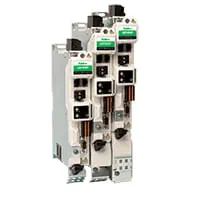
Servo drives
EtherCAT servo drives for the saw carriage and saw feed axes.
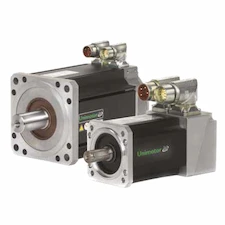
Servo motors and sizing
Motor and gearbox selection from carriage mass, stroke and sync zone length.

Line drives
AC drives for the forming and sizing main drives; DC drive replacement on DC motor mills.
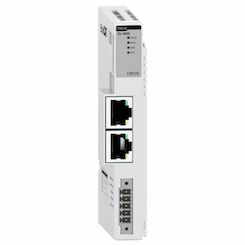
Field reference
The videos below are field footage of double-head flying saw applications from ONX Control's YouTube channel: the saw carriage cuts in sync with the speed of a tube/profile line.


Retrofit scenario
A typical picture on tube and profile mills: DC motor main drives, drives linked by analog speed references, a flying saw running on a motion card with no spare parts, and cut length corrected by hand on the floor all the time. In a retrofit the forming stands, welder and saw carriage mechanics are usually kept; saw control moves to CODESYS, the drives are replaced and the main drives are moved to AC or get new DC drives where needed.
- Surveying saw carriage mass, stroke, drive mechanics and the measuring wheel
- Re-sizing the carriage servo for line speed, length range and cut time
- Moving saw control to a CODESYS SoftMotion + EtherCAT architecture
- Coupling main drives to a common line speed reference; DC drive replacement or move to AC if needed
- Commissioning in a planned shutdown and comparison testing with length measurement on the runout table
Frequently asked questions
Why is a measuring wheel used as master for a flying saw?
Main drive motor speed does not give the real product speed: the product elongates in the sizing stands and slips against the rolls. A measuring wheel running on the product measures length directly. Wheel pressure and position must be chosen so that it does not slip, and wear should be checked regularly.
Saw or shear?
A shear or press blade cuts very quickly but can crush the tube section and leave burr; thin-walled tube needs a die matching the section. A cold saw needs a longer sync zone but gives a clean, uncrushed cut face. The choice depends on section, wall thickness, line speed and quality expectations.
Does cut length drift if line speed changes during weld adjustment?
No. The cut is triggered by measured position and the carriage follows the changing line speed with an electronic cam. What actually spoils length during speed changes is measuring wheel slip.
What sets the shortest cut length?
Carriage stroke, the sync zone (clamp times plus cut time) and return acceleration. As line speed rises, the distance travelled in the sync zone grows and the time left for the return shrinks; above a certain speed either the length must increase or the line must slow down.
What information is needed for a quote?
Line type (round tube, hollow section), product sections and wall thicknesses, line speed range, cut length range and tolerance, saw type, carriage mass and stroke, and the existing control and drive system are enough for a first assessment.
Discuss your tube or profile mill cut-off with our engineers
Share your line speed, sections and cut length targets; we will come back with saw carriage sizing and an architecture proposal.