
 Control Techniques
 Estun Automation
 CODESYS
 Crevis
 Nexcom / Nexcobot
 Leroy-Somer
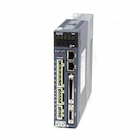 Servo Systems
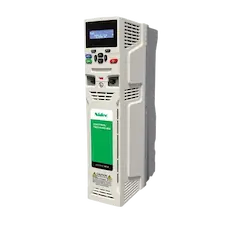 AC Drive + Motor
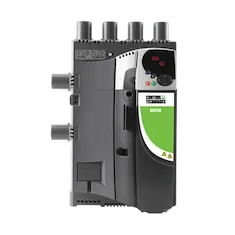 DC Drives
 Smart PLC
 Panel PC / IPC
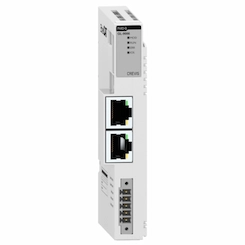 Remote I/O
Horizontal Packaging Machine (Flow Wrapper) Automation
In short
A horizontal packaging machine (flow wrapper, HFFS) wraps products from an infeed chain in film in a forming box, makes a longitudinal fin seal underneath, and seals and cuts across between products with rotary jaws. As long as the sealing jaw touches the film it must move at film speed, which requires the jaw axis to be coupled to the film axis by an electronic cam. On horizontal machines ONX Control couples the infeed, film, fin seal and rotary jaw axes to one master axis in CODESYS SoftMotion.
How it works
The rotary jaw makes one cross seal per revolution. If the circumference at the jaw tip is not equal to the pack length, a jaw turning at constant speed is faster or slower than the film at the seal, pulling or creasing it. The electronic cam therefore matches the jaw to film speed in the seal zone and speeds it up or slows it down outside the zone to reach the next product gap. When the pack length changes, the cam profile is recalculated in software; no jaw change is needed.
On printed film a photocell reads the print mark on every pack; the difference between the latched film axis position and the expected position is applied to the jaw cam as a phase correction. The cross seal and cut therefore stay in the same place relative to the print on every pack.
The infeed chain delivers products at a fixed pitch. So that each product is centred between two seals when it reaches the jaws, the infeed axis is also coupled to the same master. Logic such as not making empty packs when a product is missing can be built in the same controller using a product detection sensor.
-
1
Infeed
The infeed chain carries products at pack pitch into the forming box, synchronized to the master axis.
-
2
Wrapping and fin seal
The film forms a tube around the product; the fin seal wheels close the seam underneath and pull the film.
-
3
Registration correction
The photocell reads the print mark; the error is added to the jaw cam as a phase correction.
-
4
Cross seal and cut
The rotary jaws close in the product gap at film speed; the seal and cut are made and the pack moves to the discharge belt.
Critical parameters
| Parameter | Why it matters | Typical range / ONX field data |
|---|---|---|
| Pack length and speed (packs per minute) | Sets film and jaw axis speeds, cycle time and servo motor power. | Defined per project |
| Rotary jaw diameter and number of jaws | The ratio between jaw tip circumference and pack length sets the speed variation in the cam profile and the motor torque. | Defined per project |
| Seal time | The contact time the film needs; sets the angular width of the seal zone. | Defined per project |
| Registration tolerance | Depends on photocell response time, position latch resolution and film stretch. | Defined per project |
| Product size and height | Affects pack pitch, forming box setting and the zone in which the jaws close without touching the product. | Defined per project |
ONX architecture
In the ONX architecture, the infeed chain, film / fin seal and rotary jaw are servo axes coupled to one master axis in CODESYS SoftMotion running on CODESYS Control RTE on an industrial PC. The rotary jaw cam is calculated from the pack length; when machine speed changes, all axes speed up or slow down in the same ratio.
The photocell, product detection sensors, jaw heaters and temperature inputs connect to the same network through EtherCAT remote I/O; the registration mark position is taken with the drive's fast latch input. Pack length, seal temperatures and speed are managed as recipes from the operator panel.

CODESYS SoftMotion
Master axis, rotary jaw electronic cam, infeed sync and registration phase correction.

Industrial PC
Industrial PC or panel PC running CODESYS Control RTE and the recipe screen.
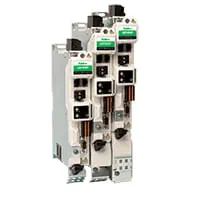
Servo drives
EtherCAT servo drives for the infeed, film and rotary jaw axes.

Servo motors and sizing
Motor and gearbox selection from the acceleration and deceleration in the rotary jaw cam profile.
Field reference
The video below shows ONX Control's 17-axis cake packaging line: 17 servo motors run in sync, and the line was designed with Control Techniques drives and a CODESYS architecture.

Retrofit scenario
A typical picture on older horizontal machines: infeed and jaws driven from a single main motor through a mechanical line shaft, gearboxes and mechanical cams, with pack length changes requiring gear or jaw changes. The forming box and jaw mechanics are usually kept; the axes are moved to separate servo motors and the mechanical cam is replaced by an electronic cam.
- Collecting current pack lengths, packs per minute and film types
- Rotary jaw cam profile and servo sizing based on it
- Splitting the mechanical line shaft and gearboxes into separate servo axes
- Moving the photocell and product detection to EtherCAT I/O
- Commissioning with trial production on different pack lengths
Frequently asked questions
Why doesn't the rotary jaw turn at constant speed?
As long as the jaw tip touches the film it must move at film speed. If the jaw circumference is not exactly equal to the pack length, constant speed cannot achieve this. The electronic cam matches jaw speed to film speed in the seal zone and makes up the difference outside the zone by speeding up or slowing down. It is the same principle as the knife drum of a rotary knife.
Does a pack length change need a mechanical adjustment?
On a machine with an electronic cam, pack length is entered in the recipe and the cam profile is recalculated; no gear or jaw change is needed. Only for lengths far below or far above the jaw circumference are motor torque and cam acceleration checked.
How is registration correction done on a horizontal machine?
The instant the photocell reads the print mark, the film axis position is latched. The difference between measured and expected position is added to the jaw cam as a phase shift, so the seal and cut stay in the same place relative to the print.
How many axes can a horizontal machine have?
A basic flow wrapper has three servo axes: infeed, film / fin seal and rotary jaw. The axis count grows as infeed lines, product collation and discharge belts are added; on ONX Control's cake packaging line 17 servo motors run in sync.
What information is needed for a quote?
Product dimensions, pack length range, target packs per minute, film types, the existing jaw design and drive system are enough for a first assessment.
Discuss your horizontal packaging machine with our engineers
Share your product and pack lengths and speed target; we will come back with a rotary jaw cam calculation, servo sizing and an architecture proposal.