
 Control Techniques
 Estun Automation
 CODESYS
 Crevis
 Nexcom / Nexcobot
 Leroy-Somer
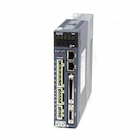 Servo Systems
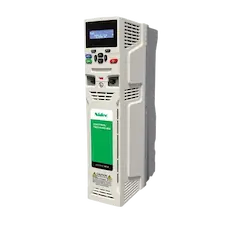 AC Drive + Motor
 DC Drives
 Smart PLC
 Panel PC / IPC
 Remote I/O
Plastic Bag Making Machine Automation
By the ONX Control engineering team · Last updated:
In short
A plastic bag making machine advances PE film unwound from a roll by one bag length each cycle, seals the bottom or sides of the bag with a sealing jaw, cuts it with a knife and stacks the bags. Bag length is set by a servo feed roll; on printed film the length is corrected every cycle from the print mark read by a photocell. Bags per minute are set together by feed axis acceleration, sealing time and cut timing. ONX Control builds the control of bag making machines with CODESYS SoftMotion, EtherCAT and servo drives.
How it works
The machine layout depends on the product: on bottom-seal machines (garbage bags, bags on a roll) the seal runs across the film and bags can be perforated and wound into a roll; on side-seal machines (T-shirt, courier, zip bags) a hot knife separates two bags and seals their sides at the same time; on wicket machines bags are punched and stacked onto a wire wicket. Courier bags add tape application, flap folding and strip feeding. The common core is the same: unwinder, tension dancer, servo feed, sealing and cutting station, stacking.
On intermittent machines the film stops every cycle: the servo feed roll advances one bag length with an S-profile, the sealing jaw comes down while the film is stopped, applies heat for a set time and lifts, and the knife cuts. Because the unwinder unwinds continuously, a dancer in between buffers the difference between intermittent feed and continuous unwinding and sets the unwinder speed. On continuous machines the film never stops; a rotary sealing drum or a sealing jaw moving with the film is tied to film speed with an electronic cam.
On printed film the bag length has to equal the print repeat. The photocell captures the position where the print mark arrives each cycle (touch probe); the controller adds the difference between the expected and measured position to the next feed length. This corrects film stretch, winding tension and small differences in print repeat before they build up. On plain film the length comes directly from the servo axis position, or from a measuring wheel if slip has to be excluded.
What usually limits cycle rate is sealing time: thick film and wide seals need longer contact. Feed axis acceleration and jerk limits are chosen for film stretch and slip; a feed that is too hard causes length errors on thin film and roll slip on thick film. When the sealing jaw is driven by a crank or servo, its down and up profile is cammed to the same master axis as the feed, so sealing time can be held constant when speed changes.
-
1
Feed
The servo feed roll advances the film by one bag length; the dancer buffers the difference to the unwinder.
-
2
Registration
The photocell captures the print mark; the measured deviation is added to the next feed length.
-
3
Sealing
With the film stopped the sealing jaw comes down, seals for the recipe time and temperature and lifts.
-
4
Cutting and stacking
The knife cuts or perforates the bag; bags move to the conveyor, wicket or winder.
Critical parameters
| Parameter | Why it matters | Typical range / ONX field data |
|---|---|---|
| Bag length and tolerance | Set by feed axis positioning accuracy and film slip; on printed film registration accuracy matters as well. | Defined per project |
| Cycle rate (bags/min) | The sum of feed time, sealing time and jaw motion; on thick film sealing time dominates. | Defined per project |
| Film thickness and material | Set sealing temperature and time, tolerance to feed acceleration and dancer tension. | Defined per project |
| Registration deviation | Difference between print repeat and bag length; depends on photocell response time and the quality of the correction algorithm. | Defined per project |
| Feed acceleration and jerk | High acceleration shortens the cycle but stretches the film and can cause roll slip. | Defined per project |
| Sealing temperature | Seal bar or hot knife temperature is held by PID; the energy balance changes with speed. | Defined per project |
ONX architecture
In the ONX architecture the feed roll, sealing jaw and auxiliary axes (flap folding, tape feed, wicket arm) are tied to one virtual master axis with CODESYS SoftMotion; each station runs from cam profiles defined against this master. The photocell is wired to a fast capture (touch probe) input on the drive or I/O module, and registration correction is applied to the next cycle's length.
The unwinder dancer is read as an analog input and coupled to the unwinder AC drive speed by PID; sealing heaters are held by temperature control. Bag length, sealing time and temperatures, registration settings and counters are managed from recipes; product changes are made by selection on the screen.

CODESYS SoftMotion and X Motion
Virtual master axis, feed and sealing cam profiles, registration correction and recipes.

Industrial PC / panel PC
Panel PC running CODESYS Control RTE and the operator screen.
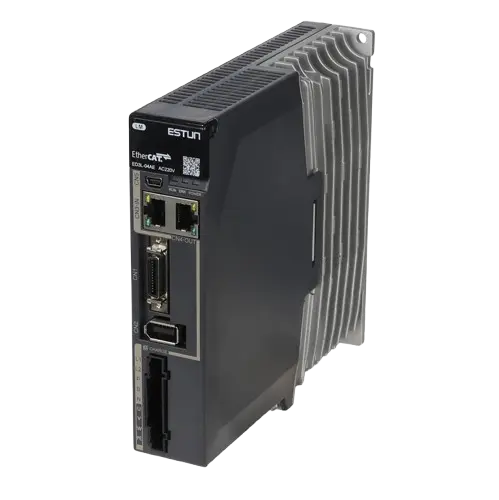
Servo drives
EtherCAT servo drives with touch probe inputs for the feed roll and sealing jaw.

Servo motors and sizing
Motor selection from roll inertia, bag length and target cycle.
Field reference
The architecture on this page is built on the servo feed, registration correction and electronic cam platform ONX Control uses in its rotary knife, horizontal and vertical packaging applications. We work out your machine's station layout and cycle target together in a meeting.
Retrofit scenario
A typical picture on bag machines: a feed driven by a mechanical cam or by a drive tied to a single control card with no spare parts, registration adjusted by hand, mechanical adjustment at every product change and old stepper motors that limit cycle rate. In a retrofit the frame, seal bars and knives are kept; feed and sealing motion move to servo axes and cam profiles in software.
- Surveying the feed roll, sealing jaw mechanics and unwinder
- Sizing feed and sealing axes for the target bags/min
- Moving control to a CODESYS SoftMotion + EtherCAT architecture; registration correction with a photocell
- Managing product recipes (length, sealing time, temperature) from the screen
- Commissioning in a planned shutdown and comparison testing against measured bag length
Frequently asked questions
How does registration correction work?
When the photocell sees the print mark, the servo axis position is latched to the microsecond by a fast capture input on the drive. The difference to the expected position is calculated and added to the next feed length, usually smoothed by a filter. If the mark is missed for a few cycles the machine does not silently switch to plain mode; it raises an alarm or continues with the last valid length.
Intermittent or continuous machine?
An intermittent machine is structurally simpler and the sealing time is applied exactly while the film is stopped; cycle rate is limited by feed and sealing time. On a continuous machine the film never stops and higher speeds are possible, but moving the sealing jaw with the film and relating sealing time to speed need more complex control.
What does a servo bring instead of a stepper?
A servo is closed loop, does not lose steps and has higher acceleration and speed range; registration correction with touch probe can be done directly in the drive. This raises both cycle rate and bag length consistency.
How long does a product change take?
When bag length, sealing time, temperature and registration settings are held in a recipe, a product change is a selection on the screen; mechanical adjustment is only needed if the seal bar or knife changes.
What information is needed for a quote?
Machine type, bag length and width range, film thickness, target bags/min, whether printed film is used and the existing control system are enough for a first assessment.
Discuss the feed and sealing control of your bag machine with our engineers
Share your machine type, bag length range and target cycle; we will come back with servo sizing and a control architecture proposal.