
 Control Techniques
 Estun Automation
 CODESYS
 Crevis
 Nexcom / Nexcobot
 Leroy-Somer
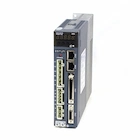 Servo Systems
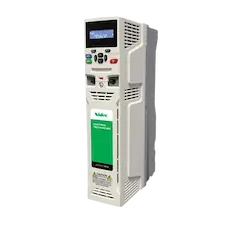 AC Drive + Motor
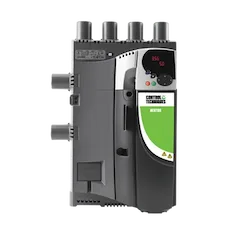 DC Drives
 Smart PLC
 Panel PC / IPC
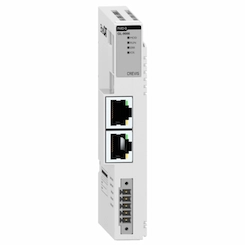 Remote I/O
DC Motor → AC Square Frame Retrofit ROI Calculator
Analyze how quickly the investment will pay for itself when you convert your old brushed DC motor system to the modern Leroy-Somer CPLS + Unidrive M701 solution. Calculate energy savings, reduced maintenance, and increased OEE (Productivity).
Net Invest = Equipment + Install − (Scrap/Incentive)

Energy Calculation Model
Old DC System Costs
New AC System Costs
Operating Profile
Net Investment
How the investment pays back month by month and what the annual gain is made of. Updates as you change inputs.
Engineering Expert Window
Critical Metrics in DC to AC Transition
Inertia Matching
The armatures of old DC motors are long and thin, so their moment of inertia ($J$) is very low. If you install a standard cast iron AC motor instead, the motor's own inertia will slow down the mechanical bandwidth. The Leroy-Somer CPLS series precisely simulates the DC motor inertia with its rotor structure, maintaining the exact same agility of your mechanics.
Field Weakening
In applications like Winders or Extruders, DC motors operate with constant power by reducing torque above the nominal speed. The M701 drive and CPLS duo provide excellent field weakening characteristics up to 3 times the base speed via closed-loop vector control, seamlessly matching your old DC performance.
Frequently Asked Questions
Will the M701 fit in place of the DC Drive panel?
Yes, compared to old thyristor-based DC drives, the Unidrive M701 is much more compact with its modern IGBT-based structure. It can usually be easily integrated into your existing panel, saving significant space.
How will we ensure encoder compatibility?
The Unidrive M701 has a built-in Universal Encoder Port. You can directly connect and read 14 different encoder types in your system, such as HTL, TTL, SinCos, EnDat, and Hiperface, without any additional modules.
Do CPLS motors require an extra fan (forced cooling)?
Due to their high torque density, CPLS motors are equipped with an IC06 (external forced fan) cooling system as standard. This allows them to deliver full torque even at zero speed (0 RPM) and never overheat.
Financial Analysis Result

DC to AC motor conversion, explained on video
How a DC motor is controlled, how a vector-controlled AC drive does the same job, what to check before you convert, and a worked payback example.
- Vector control: I_d sets the flux, I_q the torque; constant power in field weakening
- Torque, cooling, encoder and braking: a DC drive regenerates, an AC drive needs a braking resistor or an AFE
- Worked example: 13.2 months payback at 90 kW shaft power (calculator defaults)