
 Control Techniques
 Estun Automation
 CODESYS
 Crevis
 Nexcom / Nexcobot
 Leroy-Somer
 Servo Systems
 AC Drive + Motor
 DC Drives
 Smart PLC
 Panel PC / IPC
 Remote I/O
Conveyor Belt Motor Selection
Enter the mechanical data; instantly see the reflected inertia, load torque, acceleration torque, and peak torque requirements. Send the result to our engineers to request a quote for the most suitable servo/asynchronous solution.
- mTotal load on the belt
- D1Drive pulley diameter
- D2Tail (driven) pulley diameter
- mbBelt mass
- JiIdler roller inertia × count
- μBelt to bed friction
- θConveyor incline
1 Load and Linear Resistance

2 Pulley System
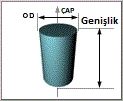
Drive Pulley (Motor)
Idler Pulley (Opposite)
3 Power Transmission Type
4 Motion Profile
Motor speed and torque over one cycle: acceleration, constant speed, deceleration. Dashed lines are nominal and peak torque with the safety factor.
Live Outputs
Updates instantly based on inputs
Engineering Note
...

Conveyor motor sizing: torque, speed and power
A conveyor motor has to do three things at once: continuously overcome friction, incline and external forces on the belt, accelerate the load and the rotating parts in the required time, and run at the right speed. A motor chosen on power alone often stalls at start or ends up oversized. This tool reflects all three through the gearbox to the motor shaft.
Conveyor motor selection in five steps
-
1
Find the force on the belt
F = Fext + m·g·sinα + μ·m·g·cosα. On a flat belt only friction remains; on an incline the weight component dominates.
-
2
Reflect the load torque to the motor
TL = F·r / (η·i). r is the drive pulley radius, η the total efficiency (belt + gearbox), i the gear ratio.
-
3
Calculate motor speed
npulley = v / (π·D) · 60 and nmotor = npulley · i. The goal is a ratio that runs the motor near its rated speed.
-
4
Reflect the inertia to the motor
J = (m·r² + ½·m1·r1² + ½·m2·r2²·(r1/r2)²) / i² + Jgear. Load inertia shrinks with the ratio squared.
-
5
Add acceleration and peak torque
Ta = J·ω / ta, continuous torque Tn = TL·SF, peak torque Tpeak = (TL + Ta)·SF, power P = 2π·n·Tn / 60000 (kW).
Worked examples
Both examples give the same result in the tool. Pulleys Ø90 mm and 3.2 kg, total efficiency 80 %, safety factor 1.5.
| Flat belt, direct drive | 15° incline, 10:1 gearbox | |
|---|---|---|
| Load, friction | 10 kg. μ 0.05 | 50 kg. μ 0.10 |
| Belt speed, acceleration | 1000 mm/s. 1 s | 500 mm/s. 0.5 s |
| Force on the belt | 4.9 N | 174.3 N |
| Motor speed | 212 rpm | 1,061 rpm |
| Inertia at the motor | 267.3 kg·cm² | 11.27 kg·cm² |
| Load / acceleration torque | 0.28 / 0.59 Nm | 0.98 / 0.25 Nm |
| Peak torque (×1.5) | 1.31 Nm | 1.85 Nm |
| Continuous power | 0.01 kW | 0.16 kW |
Frequently asked questions
How do you calculate conveyor motor power?
First find the total force on the belt: F = F_ext + m·g·sinα + μ·m·g·cosα. Multiply it by the drive pulley radius and divide by efficiency and gear ratio to get the steady torque at the motor shaft. Power is P = 2π·n·T / 60. Power alone is not enough to choose a motor: acceleration torque and inertia must be checked too.
Why does a conveyor need a gearbox?
Pulley speed is usually low: a Ø90 mm pulley at 1 m/s belt speed turns at only about 212 rpm. Motors work best around 1,500–3,000 rpm. A gearbox moves the motor into that range, divides the torque by the ratio and the reflected inertia by the ratio squared: with 10:1 the motor sees 100 times less load inertia.
Which friction coefficient (μ) should I use?
Around 0.05 for roller beds and bearing-supported systems, and 0.2–0.3 when the belt slides over a slider bed. The exact value depends on belt and bed materials; the tool's friction table gives guidance for common pairs. If unsure, calculate with the higher value.
What safety factor should I use?
The tool's default is 1.5, which covers uncertainty in load and friction, wear and starting conditions. For light systems with well-known load and friction 1.25 can do; for shock loads or dirty environments use 2.0. The factor is applied to both continuous and peak torque.
What should I watch on an inclined conveyor?
On an incline the weight component m·g·sinα makes up most of the torque: at 15° a 50 kg load needs about 127 N for the slope alone. A brake motor is needed so the load does not run back when stopped. On a decline (negative angle) the motor brakes; the tool flags this as regenerative operation, and the drive may need a braking resistor.
Servo or induction motor for a conveyor?
For belts running continuously at a constant speed, an induction motor on a variable frequency drive is enough and economical. For belts that index a fixed distance, position products or run in sync with other axes, a servo motor is preferred, and the inertia ratio must be checked as well.